
That flag on the bumper
“We are all in the gutter, but some of us are looking at the stars.” - Oscar Wilde
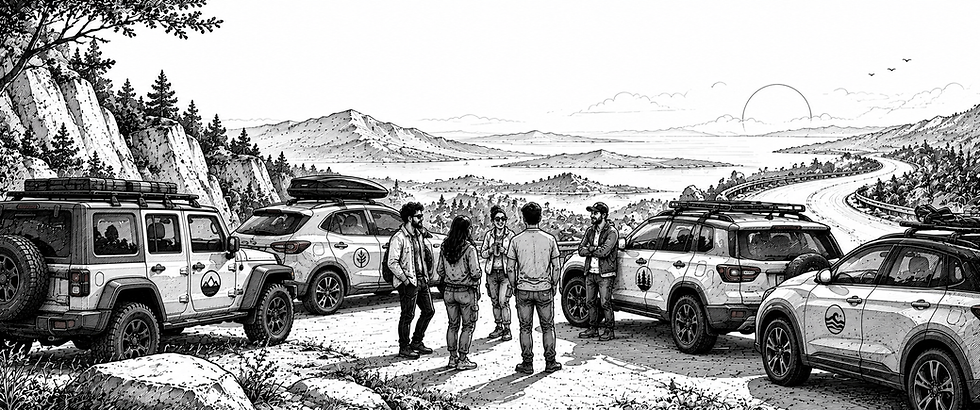
Humans have always been remarkably creative at finding ways to announce which team they belong to.
Flags, jerseys, badges, bumper stickers, tee-shirts, car decals, our profile picture.. the list of ways we choose to belong is endless.
Now, don't get me wrong - there is nothing wrong with that. In fact, 'belonging' is powerful.
The problem starts when belonging requires an enemy.
You see it everywhere in geopolitics - Us vs Them.
Our side vs Their side.
Good people vs Bad people.
The Gen Z vs The Baby Boomers
Once you divide the world into two camps, thinking becomes wonderfully simple.
You no longer have to understand the issue. You only have to know which side you're supposed to be on.
Organisations can do the same thing. We often have this Design vs Product, the Engineering vs UX, the Leadership vs employees, the Head office vs the field, the Old people vs young people. Remote vs Office.
Before long, people stop discussing the problem. They start defending their tribe.
I've seen this happen in meetings. Someone makes a suggestion. Instead of asking whether the suggestion is good, the room starts calculating who suggested it.
If it's our person, we listen.
If it's their person, we look for holes.
That's not collaboration. That's geopolitics with a PowerPoint deck.
The funny thing is that most people don't realise they're doing it.
I certainly didn't, earlier in my career. I thought good arguments won.
Then I realised something - Arguments don't win. People decide whether they trust the person making them.
Research into leadership has repeatedly found that shared identity matters to how people respond to leaders. People are more willing to trust and follow leaders they see as part of the same “we.”
That creates a responsibility for managers.
Build a “we.” Not a “we versus them.”
There is a difference.
A strong team can have designers, engineers, PMs, researchers and executives who disagree constantly.
But they still need a shared identity. “We are trying to solve this problem.”
That sentence is surprisingly powerful.
It changes the conversation.
Suddenly the engineer isn't blocking the designer. The designer isn't fighting Product.
They are both trying to solve the same problem.
This is one reason I like working with multidisciplinary teams.
The friction is useful. The tribalism isn't. It's like a car.
The engine, brakes, steering and suspension don't have the same job. They shouldn't.
Imagine trying to make them all behave like the engine.
You'd have a very fast car - For about seven seconds.
Then you'd have a very expensive problem.
Teams are similar.
Difference isn't the problem.
Losing the shared destination is. Identity can bring people together.
It can also make them stop thinking. You don't need everyone to think alike.
You need them to remember that they're in the same car, traveling to the same destination.


Comments